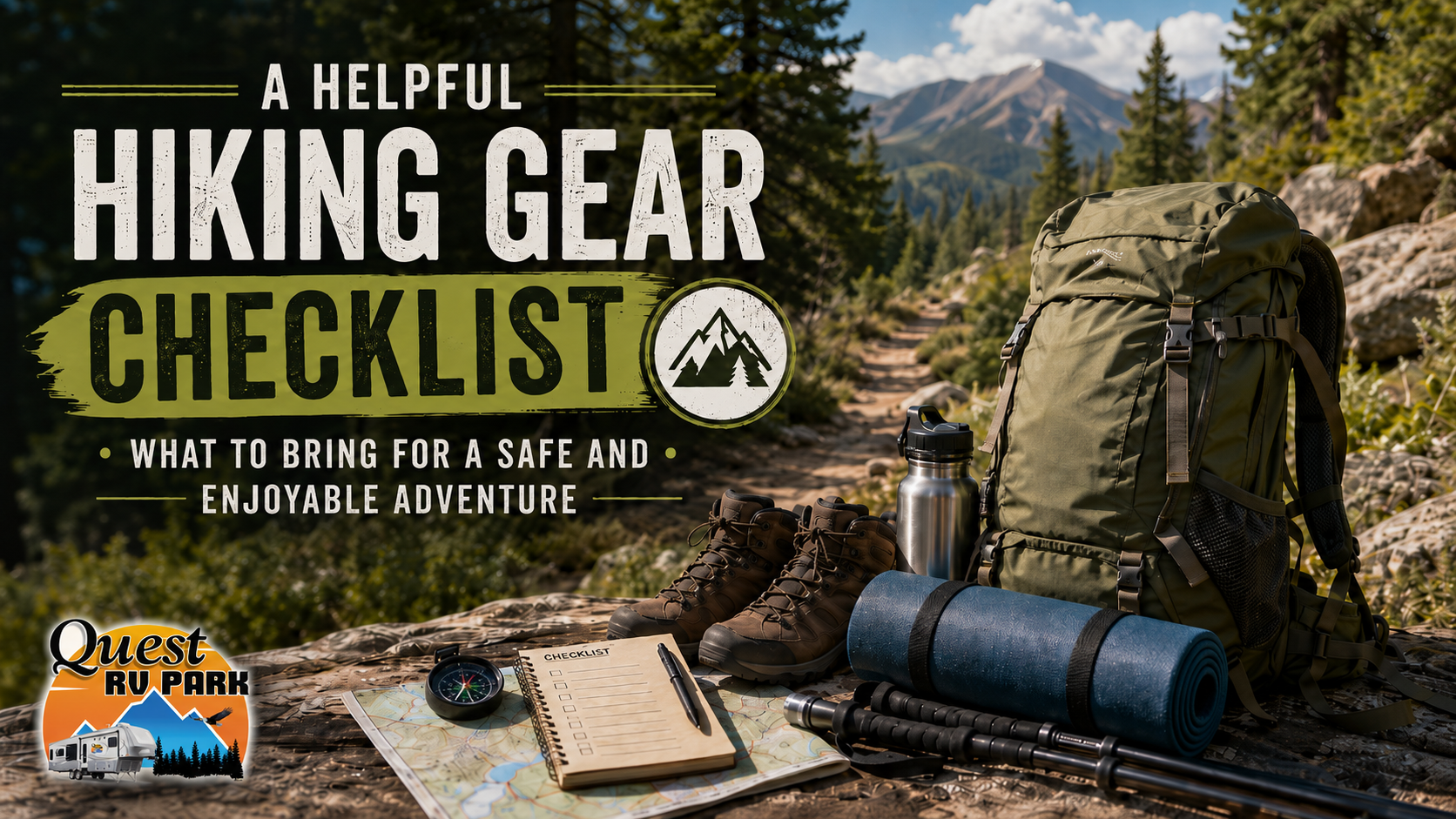
Hiking is one of the best ways to experience the natural beauty of Kentucky. Whether you’re exploring the scenic trails around Nolin Lake, hiking through the forests of Mammoth Cave National Park, or discovering other outdoor destinations throughout Central Kentucky, being prepared can make your adventure more comfortable and enjoyable.
The amount of gear you’ll need depends on several factors, including the length of your hike, weather conditions, trail difficulty, and personal preferences. Some hikes require only a few basic items, while others may call for additional equipment.
At Quest RV Park, located just minutes from Nolin Lake and a short drive from Mammoth Cave National Park, many of our guests enjoy spending their days hiking before returning to relax at their campsite. Whether you’re staying for a daily, weekly, monthly, or annual visit, packing thoughtfully can help you enjoy your outdoor adventure.
This guide highlights many of the hiking essentials you may want to consider before heading out. Always review current trail conditions, weather forecasts, and any guidance provided by the land manager before beginning your hike.
Ready for Your Kentucky Adventure?
👉 BOOK YOUR STAY NOW AT QUEST RV PARK
Enjoy spacious full-hookup RV sites near beautiful Nolin Lake and Mammoth Cave National Park.
Daily • Weekly • Monthly • Annual RV Sites Available
Choose the Right Backpack
One of the first decisions is selecting a comfortable backpack.
For many day hikes, a small daypack provides plenty of room for essential gear without becoming too heavy.
Look for features such as:
- Padded shoulder straps
- Adjustable chest strap
- Waist belt
- Water bottle pockets
- Multiple storage compartments
- Lightweight construction
A properly fitted backpack can make longer hikes much more comfortable.
Wear Comfortable Footwear
Your shoes or boots are among the most important pieces of hiking gear.
Depending on the trail and conditions, many hikers choose:
- Hiking shoes
- Trail running shoes
- Hiking boots
- Waterproof footwear when appropriate
Look for footwear that provides:
- Good traction
- Comfortable support
- Proper fit
- Breathable materials
Breaking in new footwear before a long hike may help improve comfort.
Dress in Layers
Weather can change throughout the day, especially during spring and fall.
Layering allows you to adjust your clothing as conditions change.
Helpful clothing items may include:
- Moisture-wicking shirt
- Lightweight jacket
- Rain jacket
- Fleece or light sweatshirt
- Hiking pants or shorts
- Extra socks
- Hat
- Sunglasses
Avoid cotton clothing on longer hikes when possible, as it can remain wet longer than many synthetic or wool materials.
Stay Hydrated
Water is one of the most important things to bring on any hike.
Depending on the length of your hike and weather conditions, consider bringing:
- Refillable water bottles
- Hydration reservoir
- Electrolyte drinks
Many hikers begin drinking water before starting the trail and continue drinking regularly throughout their hike.
Pack Healthy Snacks
Even shorter hikes can increase your energy needs.
Popular trail snacks include:
- Trail mix
- Granola bars
- Fresh fruit
- Beef jerky
- Peanut butter crackers
- Nuts
- Dried fruit
For longer hikes, consider bringing a light lunch.
🌲 Explore Kentucky’s Great Outdoors
👉 RESERVE YOUR RV SITE AT QUEST RV PARK TODAY
After a day exploring the trails around Nolin Lake or Mammoth Cave National Park, return to a spacious full-hookup RV site and enjoy a relaxing evening with family and friends.
Daily • Weekly • Monthly • Annual Sites Available
Navigation Tools
Even on well-marked trails, it’s helpful to know where you’re going.
Depending on your hike, consider carrying:
- Trail map
- Compass
- GPS device
- Fully charged smartphone
- Portable battery pack
Before beginning your hike, familiarize yourself with the trail route and estimated hiking time.
Sun Protection
Spending several hours outdoors increases exposure to the sun.
Helpful items may include:
- Sunscreen
- Lip balm with SPF
- Wide-brim hat
- Sunglasses
Reapply sunscreen as directed, especially during longer hikes.
Basic First Aid Supplies
Many hikers carry a small first aid kit.
Depending on your hike, it may include:
- Adhesive bandages
- Blister treatment
- Antiseptic wipes
- Gauze
- Medical tape
- Personal medications
- Tweezers
Knowing how to use your first aid supplies is just as important as carrying them.